Readin & Fightin #1
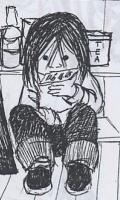
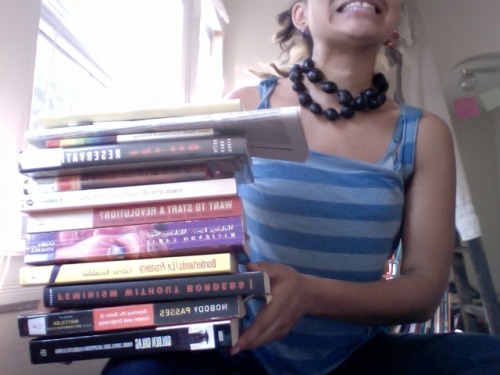
After graduating from college, Camille determined that her history and literature education had been incomplete and set about filling in the gaps by reading books and zines exclusively by women of color.
I'm reviewing Bad Mexican because I loved it, but my review might make you sad because the zine is no longer available. It's instant karma, though, because I'm bummed that Daniela's first zine, Soy Secretron is not in my greedy clutches.
It's funny how even though it's only from 2010, the zine feels old and old school. Daniela signs each copy, and mine at least has a little happy face illustration and handwritten annotations. There's a table of contents and a song recommended for each section. Daniela refers to her work as a "mini zine," but clearly it's a lot more substantial than she gives it credit for being. If you know Daniela, who is driven and ridiculously accomplished, it won't surprise you that her standards for her own work are absurdly high.
About that, funny story -- my Native American ancestors were enslaved by the white missionaries there and changed my family's name, so that's why my last name is Capistrano.
Here are organizations that I donated money to this year. Some of them even got my time, as well!
Anchor Archive Zine Library/Roberts Street Social Centre
The book isn't as good as the microblog, but that would be nearly impossible. I appreciate that Hagan didn't merely reprint the celebrity children entries she posted online, but organized the book into logical, coherent and snarky sections.
A delegation of librarians, archivists, and other library workers will travel to Palestine in the summer of 2013. We will connect with our colleagues in library- and archive-related projects and institutions there, applying our experience in the form of skillshares and other types of joint work. We will travel as truth-seekers and information-skeptics, eager to dispense with the superficial and inaccurate portrayals of life in Israel/Palestine that we see in the west and to learn about the realities of life under occupation and apartheid. As library workers, we support access to information, and recognize that this goes in more than one direction. Our trip will shed light on how Palestinian voices and information about Palestine reach us (or do not) and how Palestinian people access (or cannot access) information. We will bear witness to the destruction and appropriation of information, and support efforts to preserve cultural heritage and archival materials in Palestine. Upon return to our communities, we will share what we have seen, apply what we have learned, publicize projects we have visited, and otherwise break down barriers to access in any way we can.
Vampires, werewolves, elves and lawyers are the dangerous creatures in this new series by Phillipa Bornikova (a pen name, so readers don't get confused between this and Snodgrass's sf novels). It's a fine read, though sometimes surprisingly amateurish for such a veteran writer. There are also typos and misspellings that the editors should have caught, like George M. "Cohen" for "Cohan" and "vise" for "vice," or the overuse of the word "saliva." (Four times denoting the narrator's hunger "Saliva burst in my mouth..." and only once a vampire's fangs.) So not to seem entirely petty, let me say that I like the protagonist because she's short.